

Independent advice for buying and selling on the Costa Blanca.
One standard of advisory, applied to both sides of the transaction — driven by data and your objectives, never by developer quotas or commissions.
What we are, and what we are not.
An estate agent is instructed by the seller and paid out of the sale. That is not a criticism — it is the structure, and it is worth understanding before you rely on anyone’s recommendation.
- — We hold our own stock and vetted partner properties but fill no developer quota, which is what makes "do not buy this one" an answer we can give
- — We are not your lawyer and not your tax adviser — we coordinate with yours, and say so wherever a question belongs to them
- — Our basis of fee is agreed in writing before any work starts; in Spain the seller normally pays the agency commission, and that is separate
- — We work from what is on the market rather than from one agency’s list
- — Where we cannot answer something, we say so instead of estimating

Acquire with strategy, not sales pressure.
We help international investors enter the Costa Blanca market with clarity — assessing opportunities on their merits, not on who pays the commission.
- — Registered comparables from the same urbanisation, not coastal averages
- — Licence status and planning position: what was permitted, what was built, what the registry says
- — Tourist letting: whether the town would issue the planning-compatibility report, and what the community of owners allows
- — New build vs. resale — including how the two are taxed differently
- — The full cost picture before the price conversation
- — Coordinated completion before a notary, through to the Land Registry

Sell with discretion and reach.
We position your property to the right international buyers — quietly and precisely — and negotiate solely in your interests.
- — Valuation from registered sales, not from portal asking prices
- — Discreet, targeted marketing — not mass listing
- — A qualified shortlist of buyers rather than every enquiry a portal produces
- — Licences and documentation assembled before the first viewing, not during the offer
- — The tax withholding for non-resident sellers, and the handover, coordinated
Why a purchase on the Costa Blanca needs a closer look.
If you plan to let the property while you are away, the rules in the Valencian Community are tight. A tourist dwelling may be let to the same guest for no more than ten consecutive days; it needs a favourable report from the town hall on its planning compatibility and an entry in the regional tourism register, valid for five years, whose number must appear in every advert. The registration does not simply pass to the buyer: a new owner registers again, with a favourable report from the town. In a building with a community of owners, new tourist use has needed the community’s prior approval since April 2025, and towns may cap the number of tourist dwellings per building or zone.
For a home you will live in, or let long-term, this is background. For a purchase whose numbers rest on holiday letting, it is not — which is why we establish what the town and the community allow before the reservation, not after. The purchase tax deserves the same care: since 1 June 2026 a resale pays 9% transfer tax (ITP); once the value exceeds one million euros, the rate is 11% on the whole value, not only on the part above it. A new build bought from the developer pays 10% VAT (IVA) plus 1.4% stamp duty (AJD) instead.
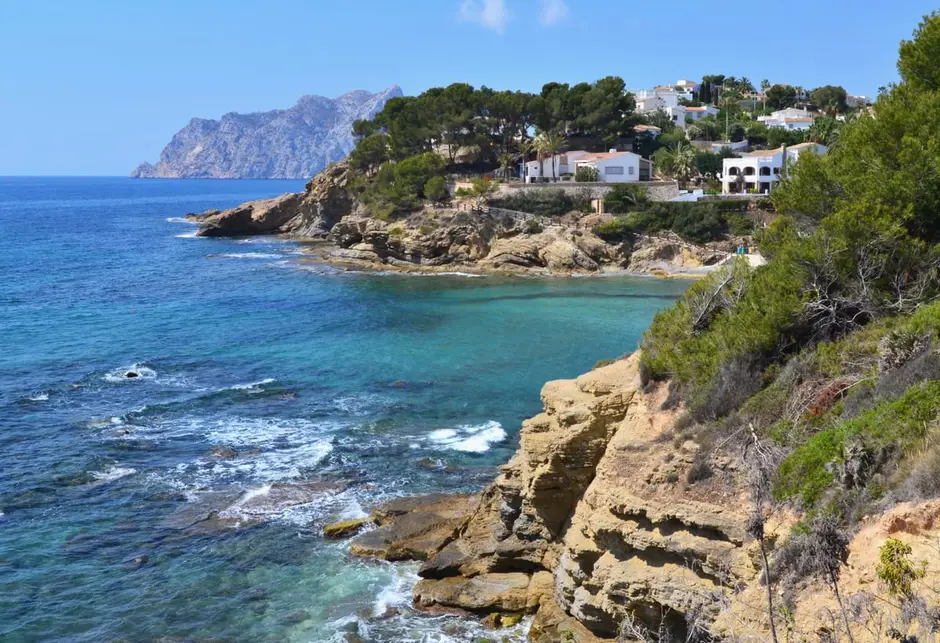
Coordinated from NIE to Land Registry.
A purchase in Spain follows a fixed sequence: NIE (the identification number for foreigners), reservation, checks at the Land Registry, the private contract, and completion before a notary. On the Costa Blanca, one more check comes in as soon as holiday letting is part of the plan: whether the town and, where there is one, the community of owners allow it. We coordinate each step with your lawyer and tax adviser, so nothing is signed before it has been verified.
We advise; we do not act as your lawyer. Legal and tax opinions come from independent professionals we work alongside.
Talk through the process →How the advisory process works.
Consultation
We understand your objective — buying, selling or both.
Strategy
The right area for that objective, then the right house within it.
Verification
Registry, licences, planning position and running costs, before you commit.
Transaction
Coordinated completion, executed before a notary.
Beyond
Ongoing guidance — hold, let, reinvest or exit.
What buyers ask us first.
What does a buying adviser do that an estate agent does not?
An estate agent is instructed and paid by the seller, so their duty runs to the seller. We are instructed by you, hold our own stock alongside vetted partner properties and fill no developer quota — which means we can recommend against a property, and frequently do. We also carry out the checks before a deposit is placed rather than after.
Who pays you — the buyer or the seller?
The basis of our fee is agreed with you in writing before any work begins. In Spain the estate agency commission is normally paid by the seller and is already reflected in the asking price; that is a separate arrangement from ours. If anyone is vague with you about who pays them and for what, treat that as the answer.
Are you tied to particular agencies or developments?
No. We work from what is on the market regardless of who is listing it, and we do not carry a developer’s stock. That independence is the reason the firm exists; it is also why we cannot promise you access to something that is not for sale.
What do you check before I commit to a property?
The registry entry and the charges on it, the cadastral record, whether what stands on the plot matches what was licensed, the licence of first occupation or, for more recent buildings, the declaración responsable that replaced it, community debt where there is a community of owners, the planning position of the plot, and the full cost picture including whether the reference value exceeds the agreed price. Anything legal or fiscal goes to your lawyer or tax adviser with our findings attached.
How long does buying on the Costa Blanca take?
The step whose duration is least within your control is the NIE, which is why we start it as soon as a purchase looks plausible. After that the timetable is driven by the checks and by whether the seller’s documentation is in order. We would rather tell you a purchase needs more time than watch a deposit go into a private contract before the checks are back.
Do I need to be in Spain to buy?
Not for every step. A power of attorney granted to a lawyer in Spain can cover the NIE application and, if you wish, completion itself. You will still want to have seen the property, and preferably outside August.
Do you advise on selling as well?
Yes, and on the same basis. On the sell side that means valuing from registered sales rather than from portal asking prices, having the documentation assembled before the first viewing rather than during the offer, and coordinating the tax withholding on non-resident sellers where it applies.
Do you give tax or legal advice?
No, and we are direct about the line. We explain mechanisms, name the authority that sets a rule and tell you what a decision depends on — but the opinion that you act on should come from an independent lawyer and a tax adviser. We work alongside them and will say plainly when a question is theirs rather than ours.

Ready to buy or sell on the Costa Blanca?
Book a complimentary, no-obligation consultation and we’ll map out the right approach for your goals.