

Dénia
A port town with a castle above the old town and the Montgó at its back. Anyone searching here chooses between two coastlines first.
Source: INE, Censo Anual de Población 2025 · accessed 2 November 2026
Dénia sits at the northern end of the Costa Blanca, and anyone who knows the name only from beach photos underestimates it. This is a port town with a castle, an old town and more than 47,000 registered residents, a town with a daily life of its own.
Castle, port and Montgó
The castle stands on a hill in the middle of town. Its first buildings date from the 11th and 12th centuries, the Islamic period. From the top the view runs across the rooftops of the old town, the sea and the Montgó, the mountain whose natural park Dénia shares with Xàbia.
Below lies the port, with ferries to Ibiza, Formentera and Mallorca. Since 2015 Dénia has also held the title of UNESCO Creative City of Gastronomy.
Two coastlines in one municipality
The municipality has more than 20 kilometres of coast, and the town divides it into two stretches. To the north, Les Marines has wide sandy beaches, with pebbly sections only at l’Almadrava. To the south begins Les Rotes: first a sandy beach, then rocky coves. Parts of the coast are protected as a marine reserve.
For a buyer, this is the first decision, before the question of the house: wide sand to the north, or rock and coves to the south.
What the figures say
On 1 January 2025 the census of Spain’s statistics office, the INE, counted 47,568 residents in Dénia, 13,844 of them with a foreign nationality, around 29 per cent. Colombians are the largest group (2,347), followed by the British (1,258) and the Germans (1,113), then Ukrainians, Russians and Romanians.
The census counts those who are registered here. Holiday-home owners who are not registered do not appear in it. The figures describe the municipality, not the property market.
As for the market: according to the notarial deeds analysed by the Spanish housing ministry (MIVAU), 1,964 home sales were signed in Dénia in 2025. For the province of Alicante as a whole, the land registries recorded 53,385 home purchases in the same year, 43.29 per cent of them by foreign buyers, the highest share of any Spanish province. Notarial and land-registry figures come from different sources and cannot be set against each other.
A note on the name
The official name is Dénia, with an accent. In Spanish you will often read Denia. Listings use both spellings; they mean the same municipality.
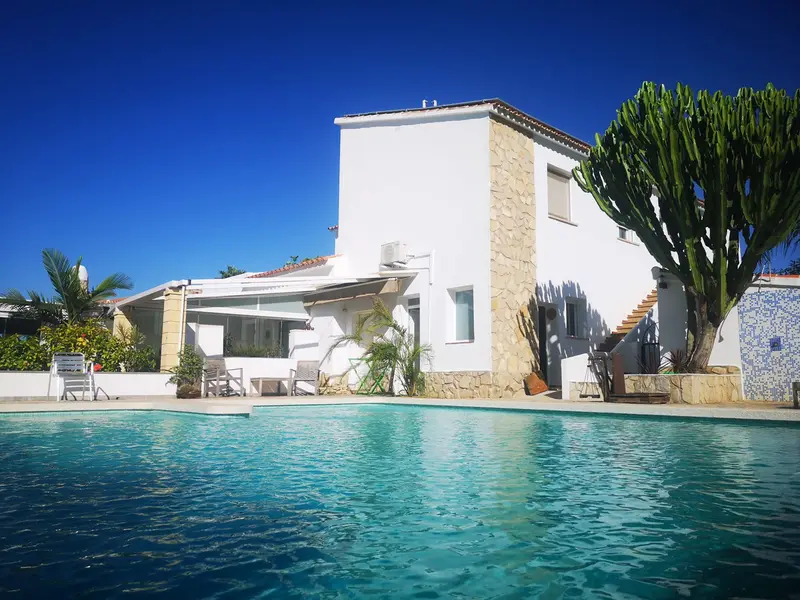
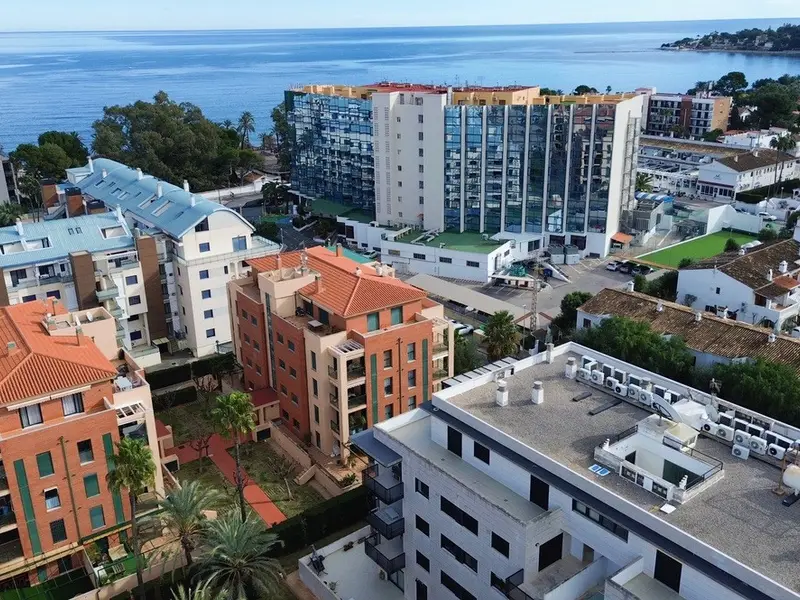
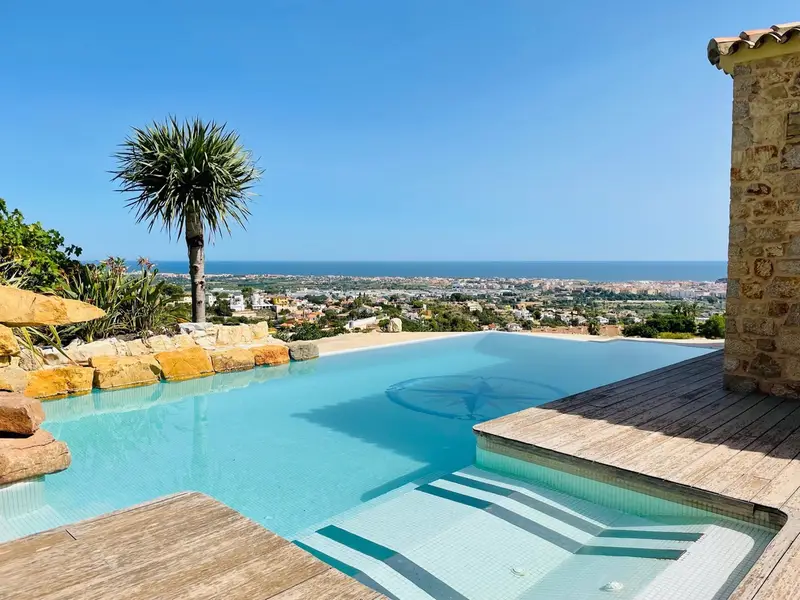
Current properties in Dénia
On holiday letting
In the Valencian Community this is decided by the individual property, not by the town alone: it needs a favourable report from the municipality on its compatibility with planning rules and an entry in the Registro de Turismo de la Comunitat Valenciana. Since April 2025, where there is an owners’ community, a new holiday let also needs that community’s express approval. We check this for the specific property before anything is signed. A listing that says letting is “possible” is not a registration.
Guide to holiday lettingSee new properties first
Buying on the Costa Blanca rarely takes just a few weeks. Tell us what you are looking for — we get in touch when something fitting comes up, and no more often than that.
Thank you — you will hear from us when something fitting comes up.
Population figures are official, from the INE. Market observations are our own and are not statistics.